Loredano Rosin
Loredano Rosin (1936–1992) was an Italian master glassmaker and sculptor whose work occupies a distinctive place in twentieth-century Murano glass. Born in Venice on 10 January 1936, he moved with his family to Murano in 1948, where his father Giovanni worked as a glassblower. Rosin entered the furnace at a young age and received his first training under master glassmaker Romano Zanetti, known as “Cocui Saor.”
Rosin developed within the traditional Murano apprenticeship system, progressing through different roles in the furnace while learning the techniques of Venetian glassmaking. Rather than concentrating on conventional blown glass, he became increasingly fascinated by solid glass, exploring its potential as a material for sculpture. This interest would become fundamental to his later artistic identity.
An important development came during the 1960s. Rosin briefly worked alongside master Ermanno Nason, and in 1965 began collaborating with Egidio Costantini's Fucina degli Angeli. Through this environment he participated in the translation of designs by internationally recognised artists into glass. Sources documenting this period associate the workshop with artists including Pablo Picasso, Marc Chagall, Max Ernst, Jean Arp and Jean Cocteau. The experience helped Rosin develop a more sculptural and three-dimensional approach to glass.
From 1968 to 1974, Rosin also worked as a master at Salviati & C. During these years he continued refining his ability to model substantial masses of hot glass, gradually moving away from traditional decorative production toward sculpture as an independent artistic form.
In 1975, Rosin established Vetreria Artistica Loredano Rosin, where he worked closely with his brother Dino Rosin. The studio gave him the freedom to pursue his own sculptural ideas and experiment with glass compositions and techniques that had become less common in contemporary Murano production.
One of the materials most strongly associated with Rosin is calcedonia (chalcedony) glass. By introducing metallic compounds into the molten glass, complex flowing striations and colour variations could be produced, reminiscent of natural minerals such as agate. Rosin combined these effects with his command of solid glass modelling to create highly individual sculptures.
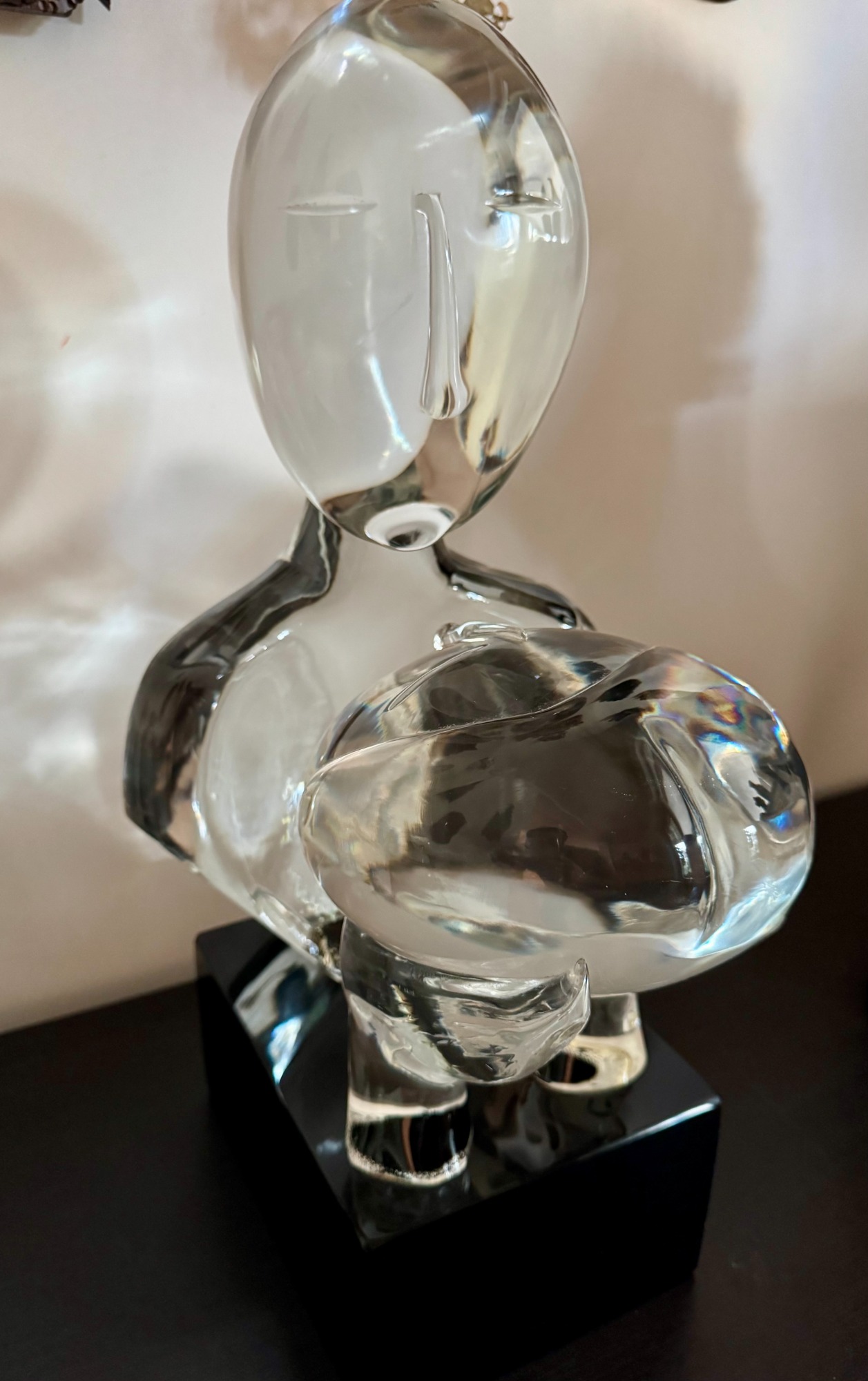
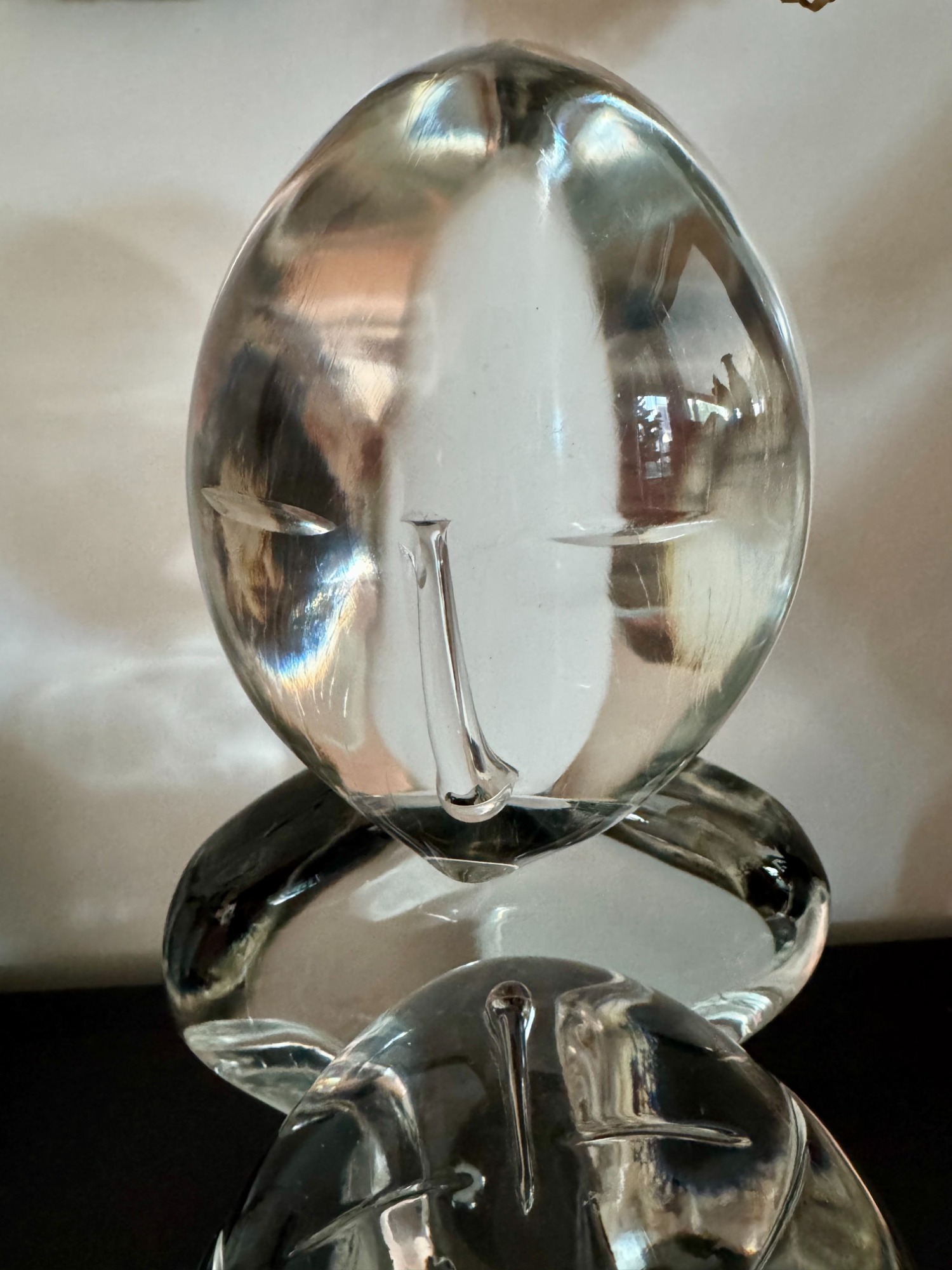
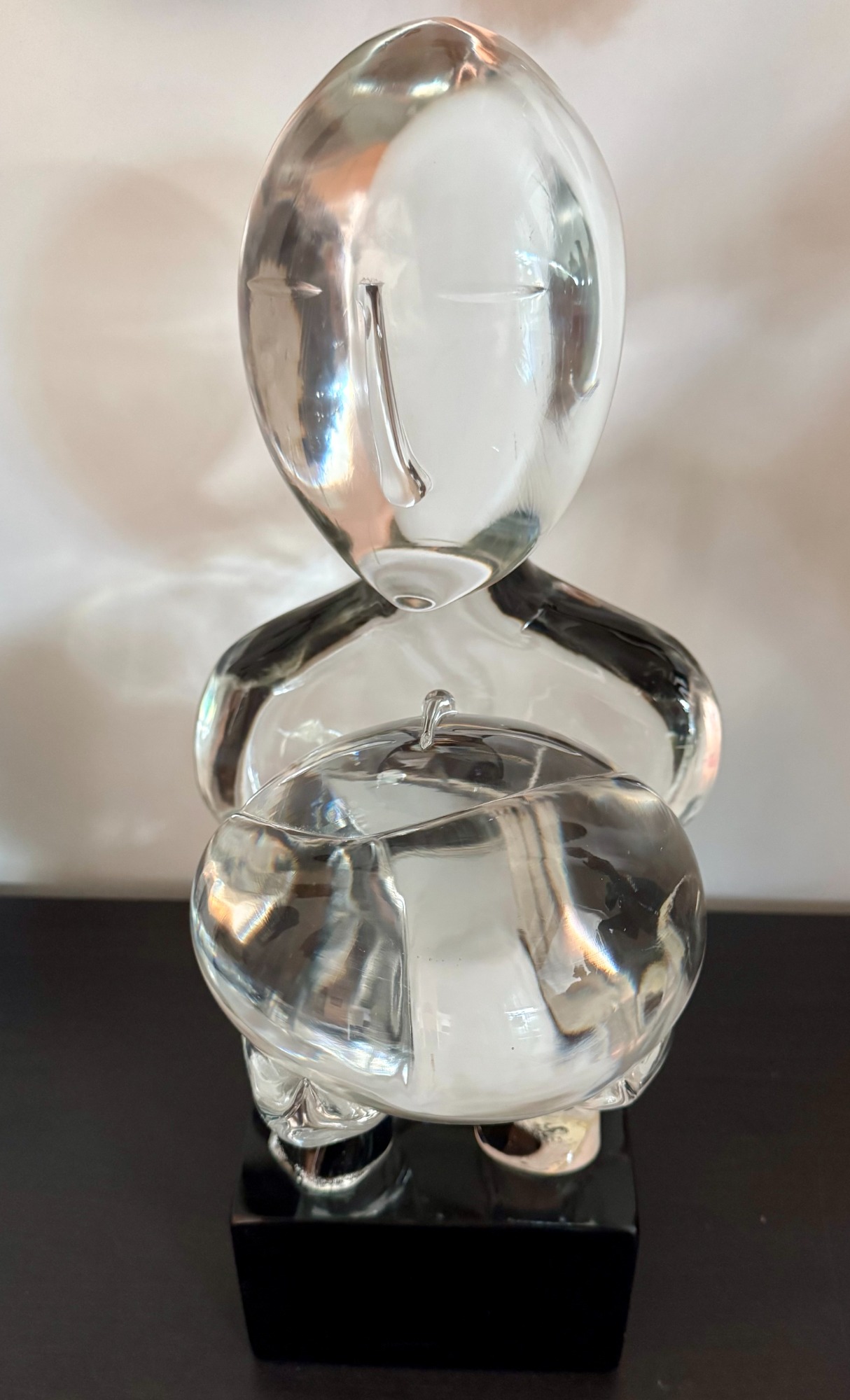
The human figure became one of the defining subjects of his work. Heads, torsos, couples and stylised figures demonstrate his ability to transform a heavy mass of glass into forms that appear fluid, balanced and expressive. Animals and abstract sculptural forms also appear within his oeuvre. Surviving documented examples show his use of clear, smoked, coloured and calcedonia glass, often subsequently ground and polished by hand.
During the 1980s Rosin's work gained increasing international exposure, with exhibitions documented in the United States, Britain and Japan. His career was cut short by his death in 1992, leaving behind a body of work that illustrates the transition of Murano glass from traditional decorative craftsmanship toward autonomous sculptural expression.
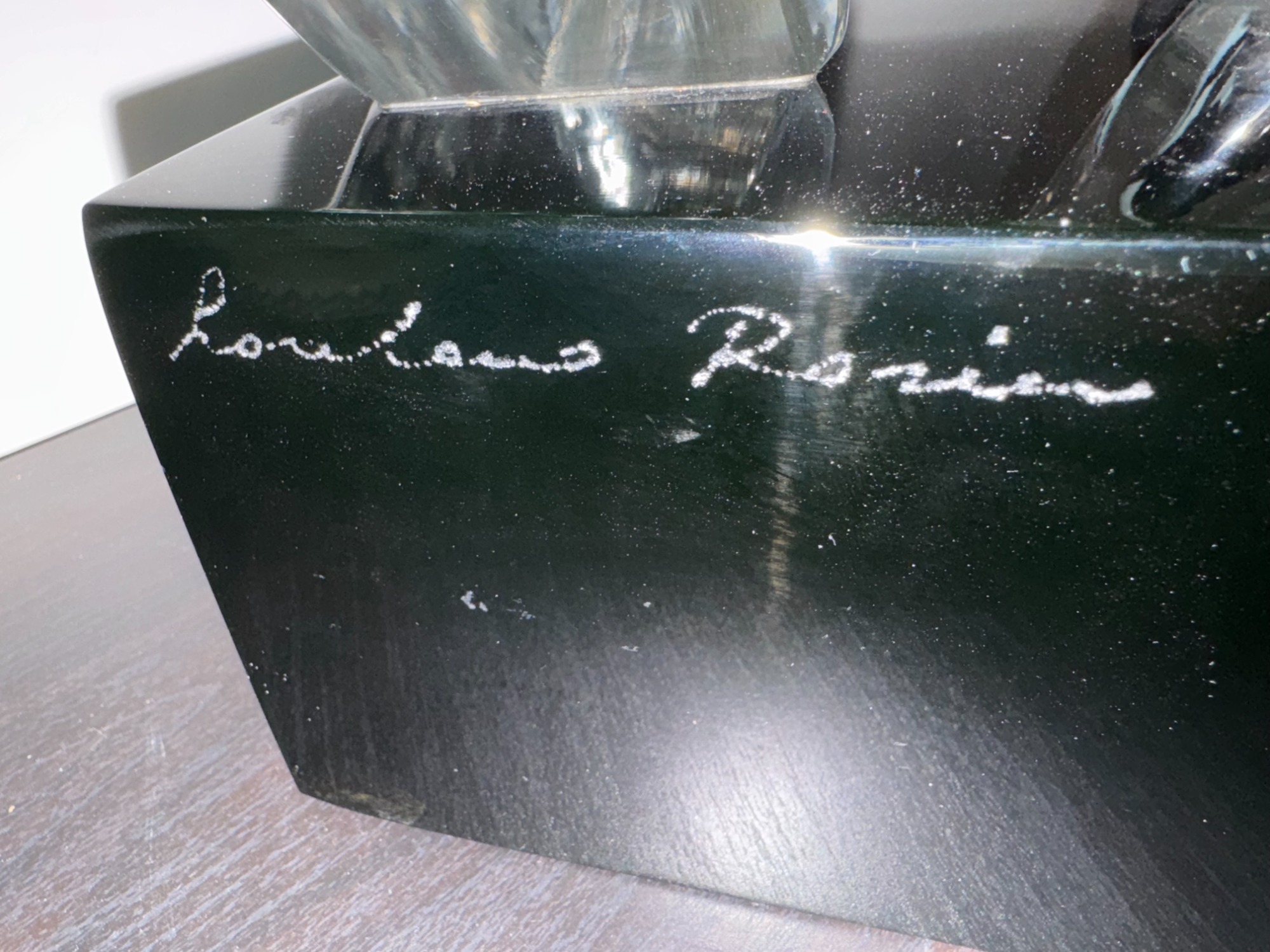
MURANIQ holds works by Loredano Rosin in its private collection, including signed examples of his sculptural glass.